Draft
Draft and organize chapters in a focused writing environment.
StorySmith gives fiction authors one connected place to develop characters, build worlds, plan stories, write manuscripts, collaborate, review continuity, and prepare finished work for publishing.
Writing a novel involves much more than drafting chapters. Characters evolve. Worlds develop. Locations gain history. Timelines shift. Notes multiply. StorySmith keeps those moving pieces close to the manuscript so authors can spend less time managing disconnected tools and more time developing the story itself.
Draft and organize chapters in a focused writing environment.
Build structured characters with relationships, identities, histories, abilities, and visual references.
Develop worlds, locations, cultures, languages, beliefs, history, maps, and lore.
Move from manuscript to formatted output through Publisher Studio.
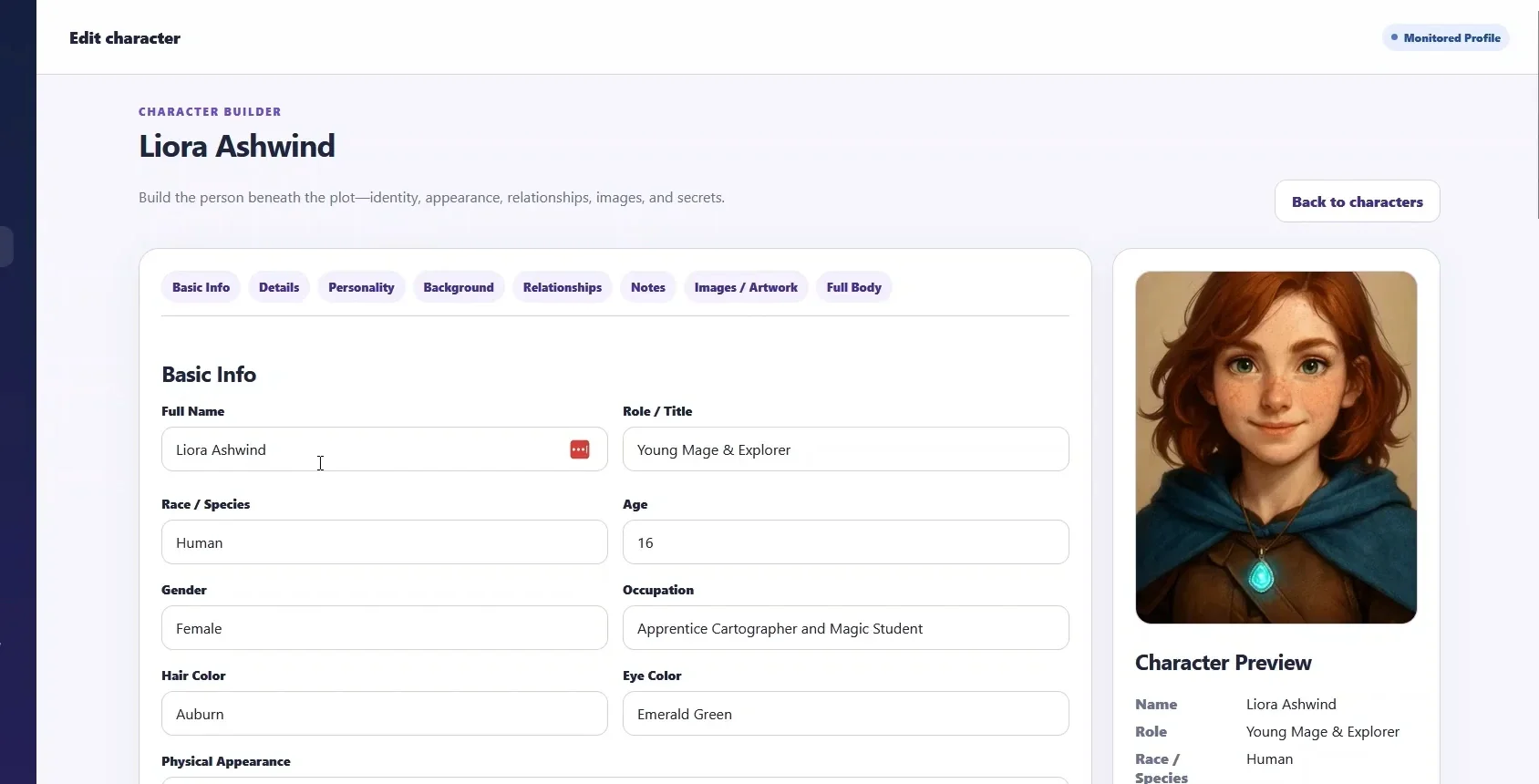
StorySmith’s chapter-based writing environment keeps the manuscript connected to the larger creative project. Draft, revise, organize chapters, maintain story and chapter notes, track progress, import existing Word manuscripts, and move into Focus Mode when you want fewer distractions.
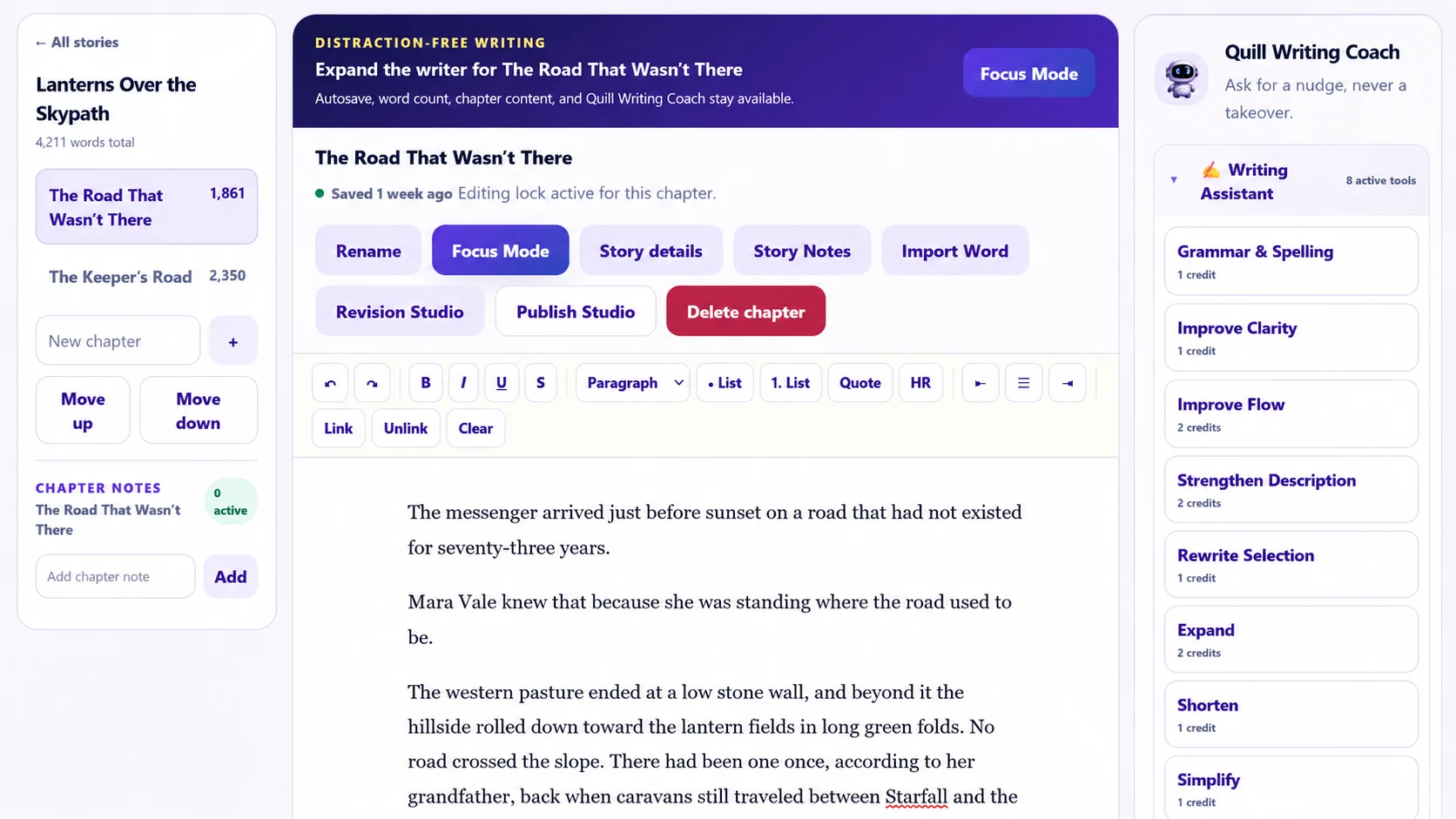
Focus Mode gives the manuscript room to breathe while keeping Quill Writing Coach available alongside your work. Use AI assistance when it helps, ignore it when it doesn’t, and keep the creative decisions where they belong—with the writer.
The writer remains the author.
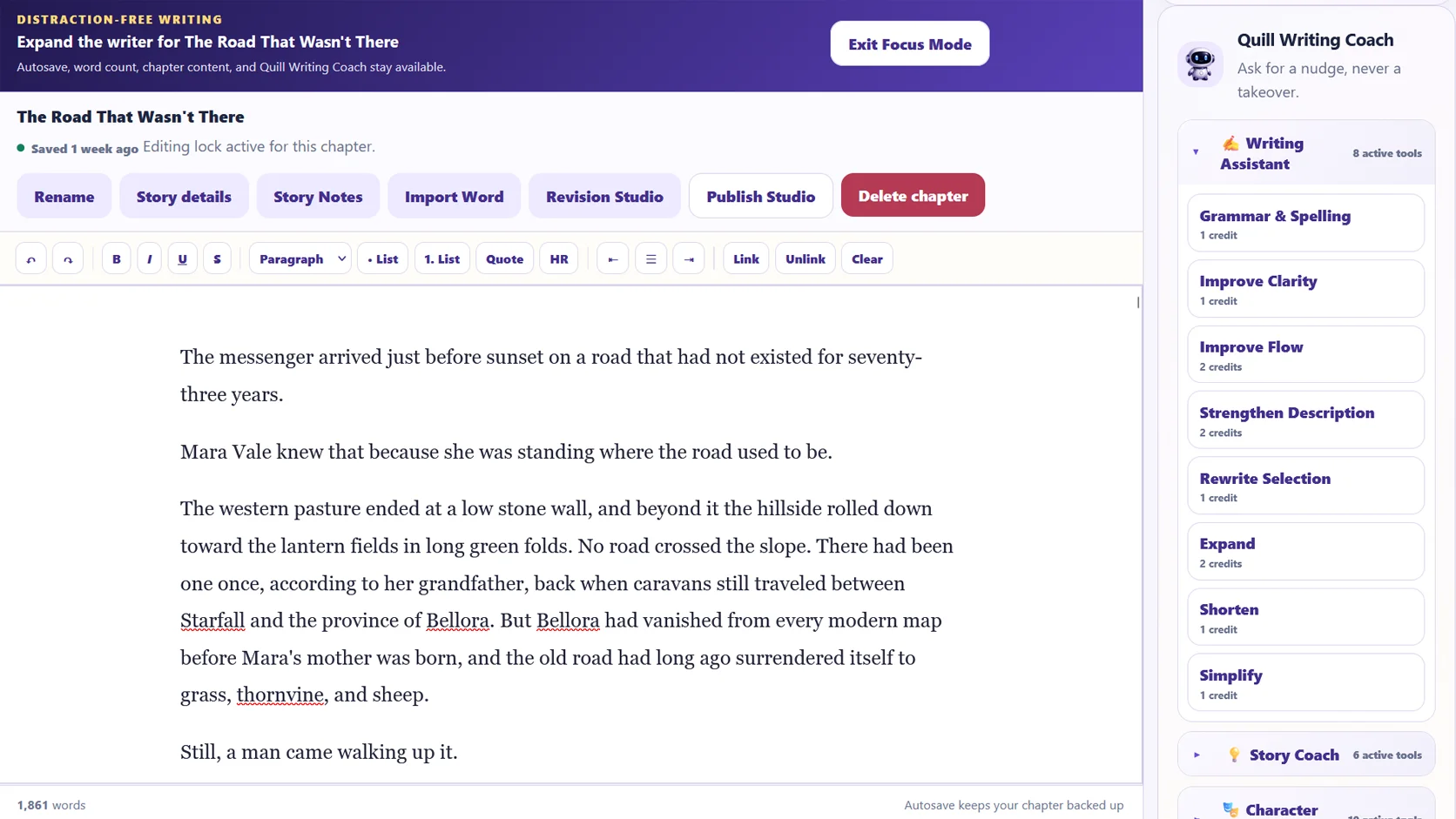
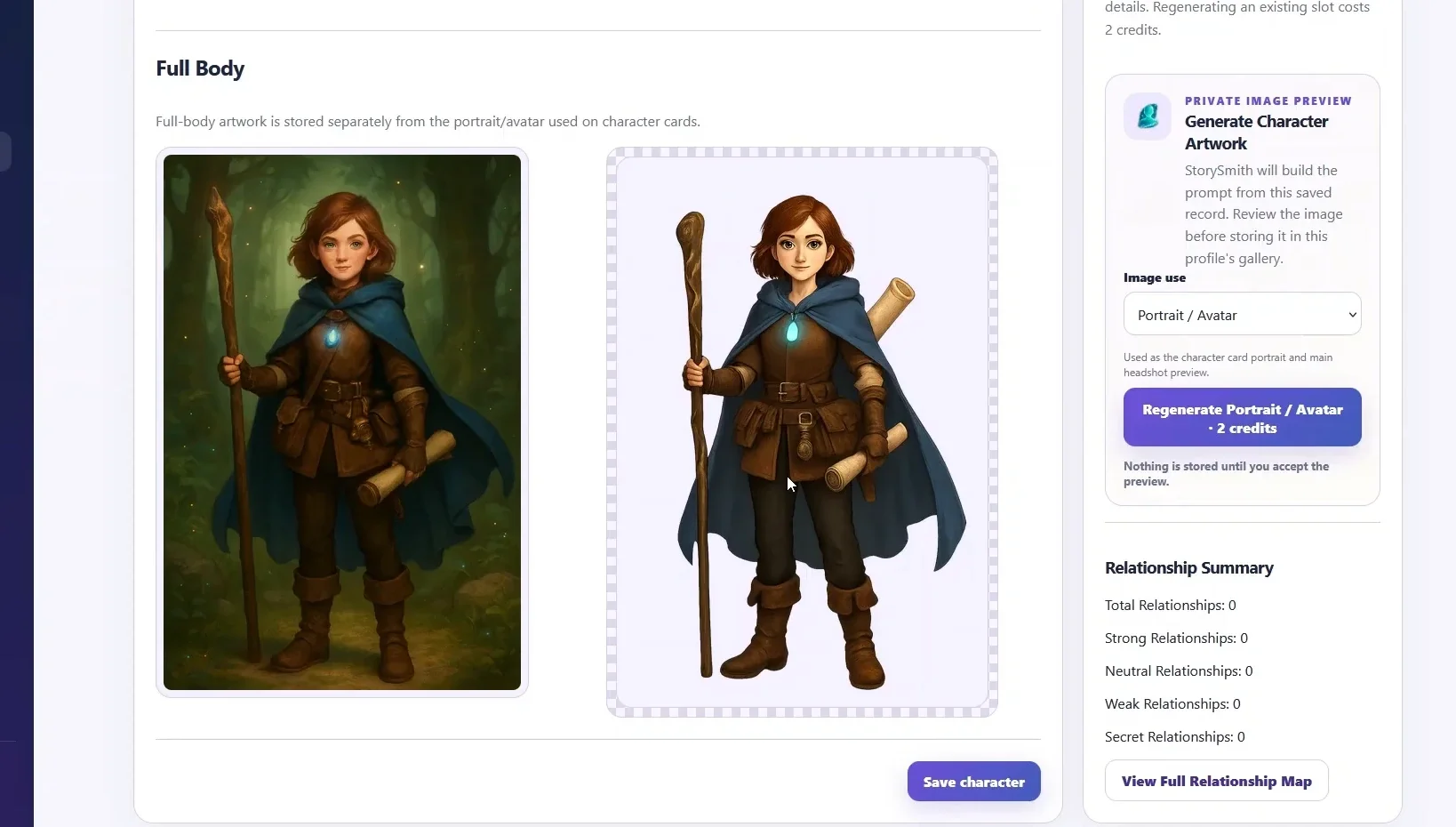
Characters in StorySmith are more than isolated notes. Structured profiles can capture appearance, personality, background, relationships, identity, culture, languages, beliefs, abilities, limitations, training, and other details that shape how a character behaves inside the story.
Character information can also support visual creation and manuscript review, helping authors compare the person they designed with the person appearing on the page.
From structured profile → visual reference → manuscript context
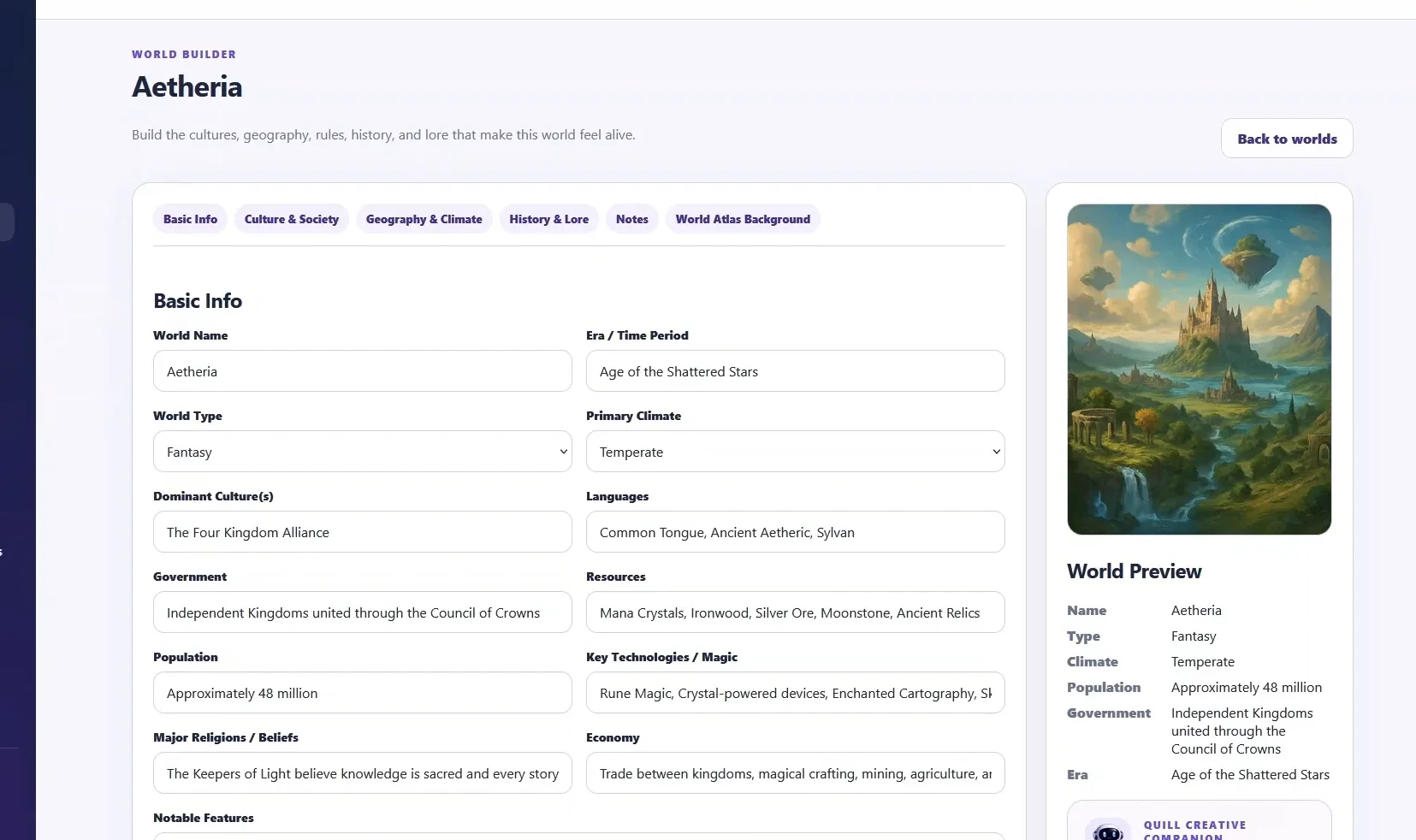
Build the broad foundations of a fictional world through geography, climate, government, population, cultures, languages, religions, technology, magic, economy, history, conflicts, factions, myths, and lore.
StorySmith keeps world information structured so it can remain useful throughout planning and drafting instead of disappearing into scattered notes.
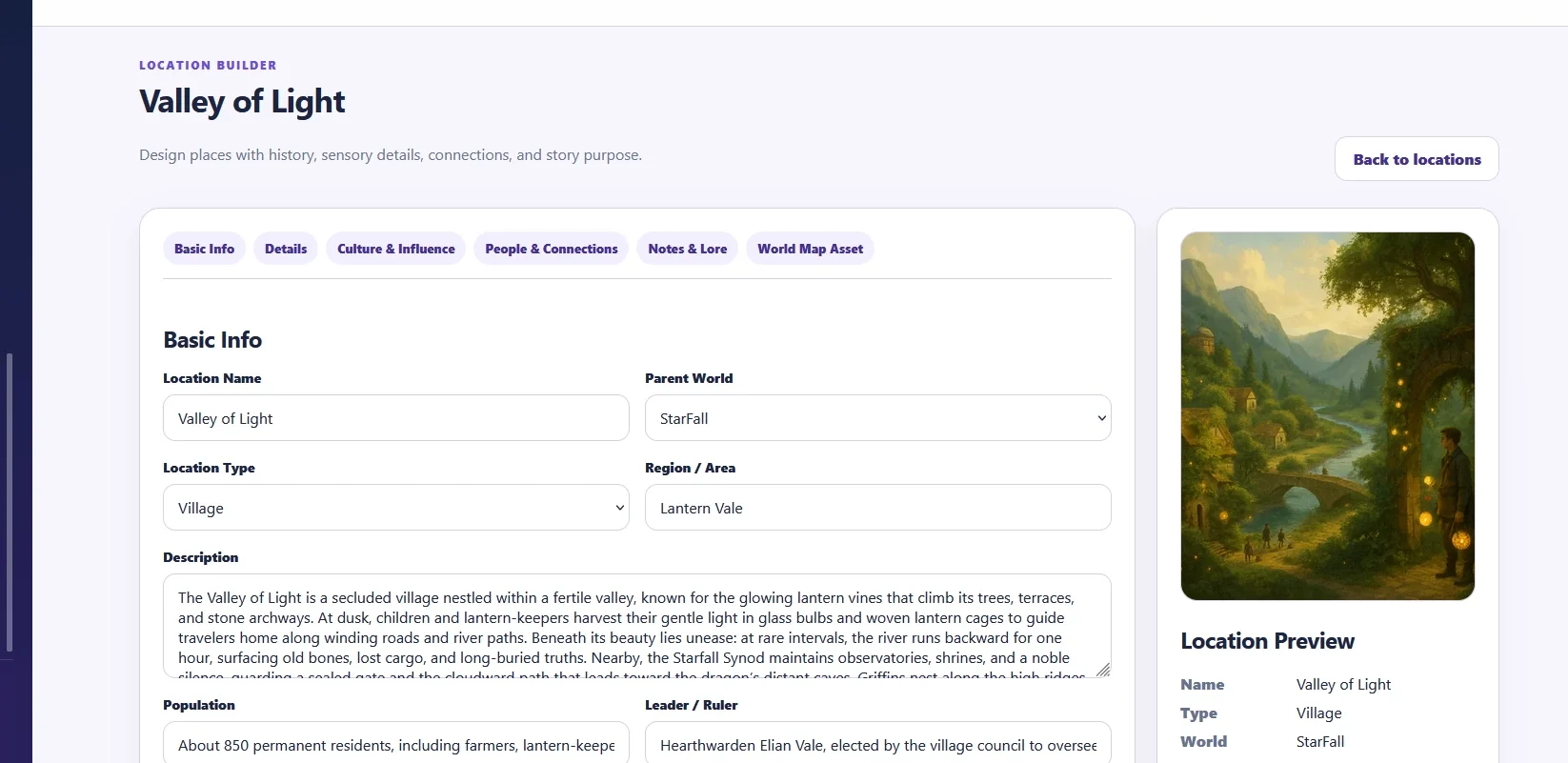
StorySmith Locations let authors move from broad worldbuilding into the details of a particular kingdom, city, village, region, landmark, or other setting, including local cultures, laws, people, notes, sensory details, and relationship to a parent world.
That creates a natural hierarchy from World → Location → Character instead of treating every piece of lore as an isolated note.
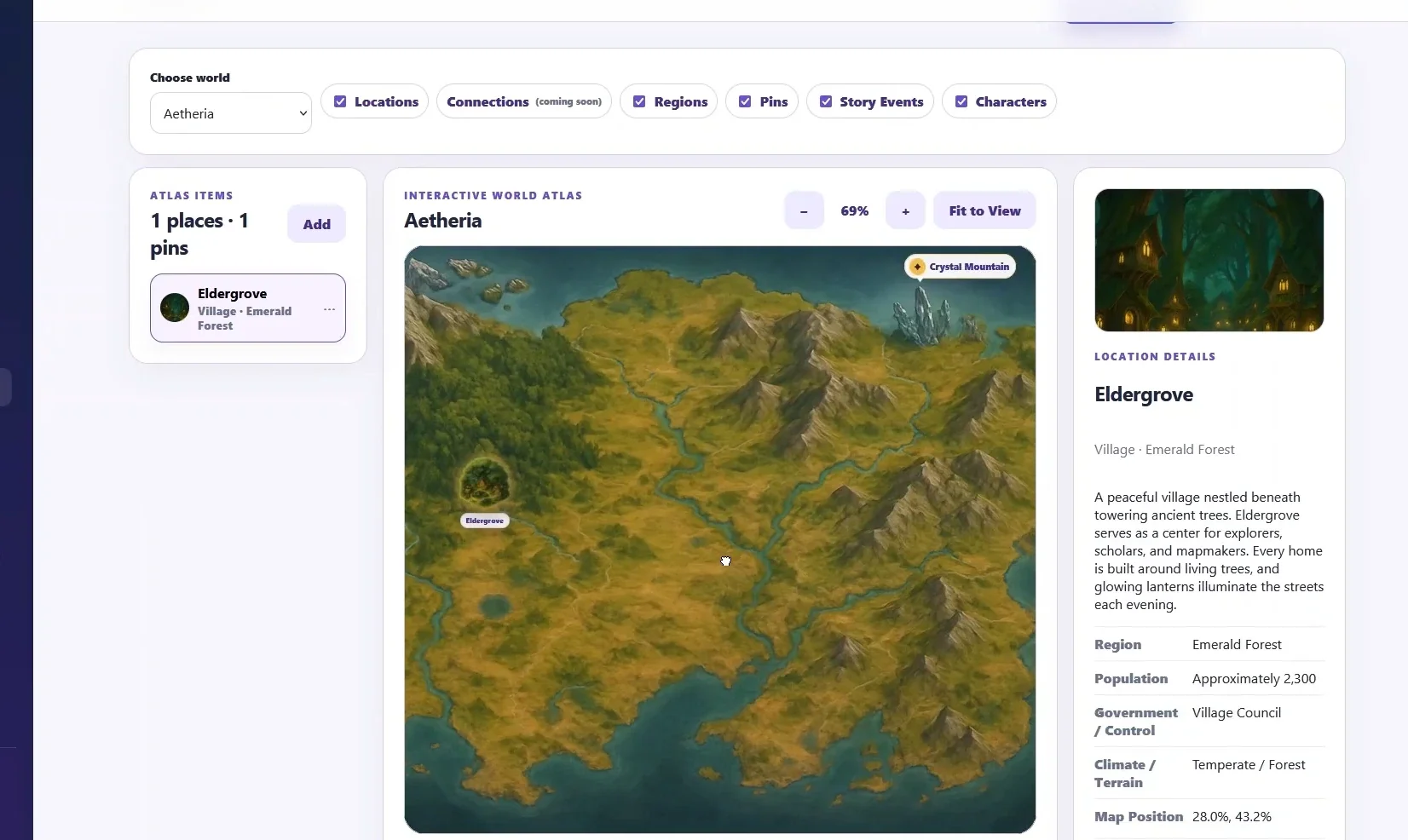
StorySmith’s Atlas turns the fictional world into a visual working space. Place locations, regions, story events, characters, and other project information onto the map so geography becomes part of the planning process rather than an image stored somewhere else.
Authors can move between the map and the information behind each place while keeping geography connected to the larger story.
Detailed story information becomes increasingly difficult to remember as a manuscript grows. StorySmith can use established characters, worlds, locations, timeline information, and Story Map data as context during manuscript review.
Is a character behaving consistently with their established motivations?
Has an important relationship changed without development?
Is a character using an ability they have not acquired?
Does a scene conflict with established location rules?
Does an event contradict the timeline?
Has an important supporting character disappeared from the manuscript?
These are suggestions for the author to review—not automatic corrections.
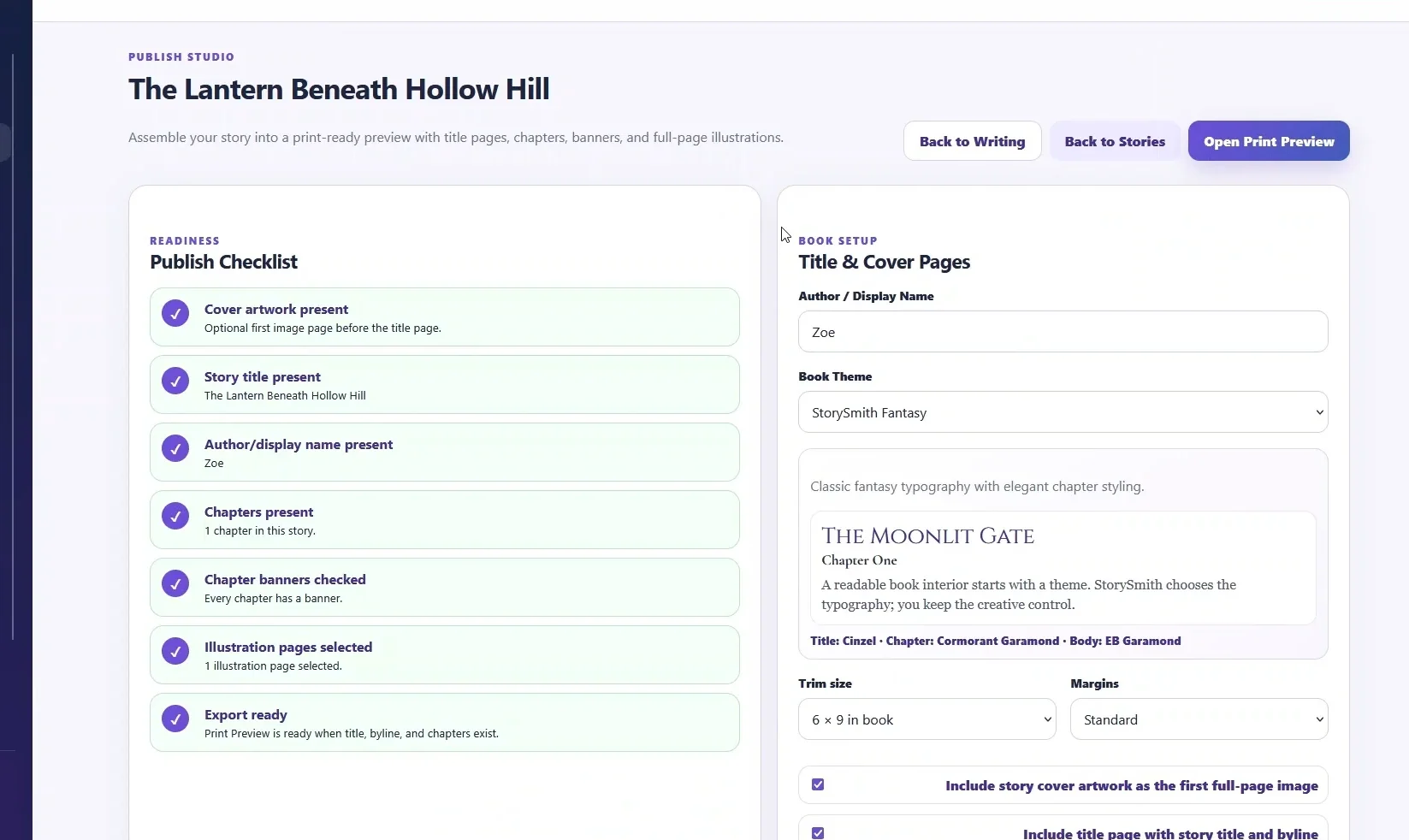
Publisher Studio helps authors move from writing into book preparation without leaving the StorySmith workflow. Review publication readiness, choose book styling, control layout options, and prepare the manuscript for use outside StorySmith.
Keep long manuscripts, planning, characters, and story information connected.
Build deep worlds, locations, cultures, maps, timelines, magic, and lore.
Move from story development through manuscript preparation in one environment.
Invite co-authors while sharing the project information the story depends on.
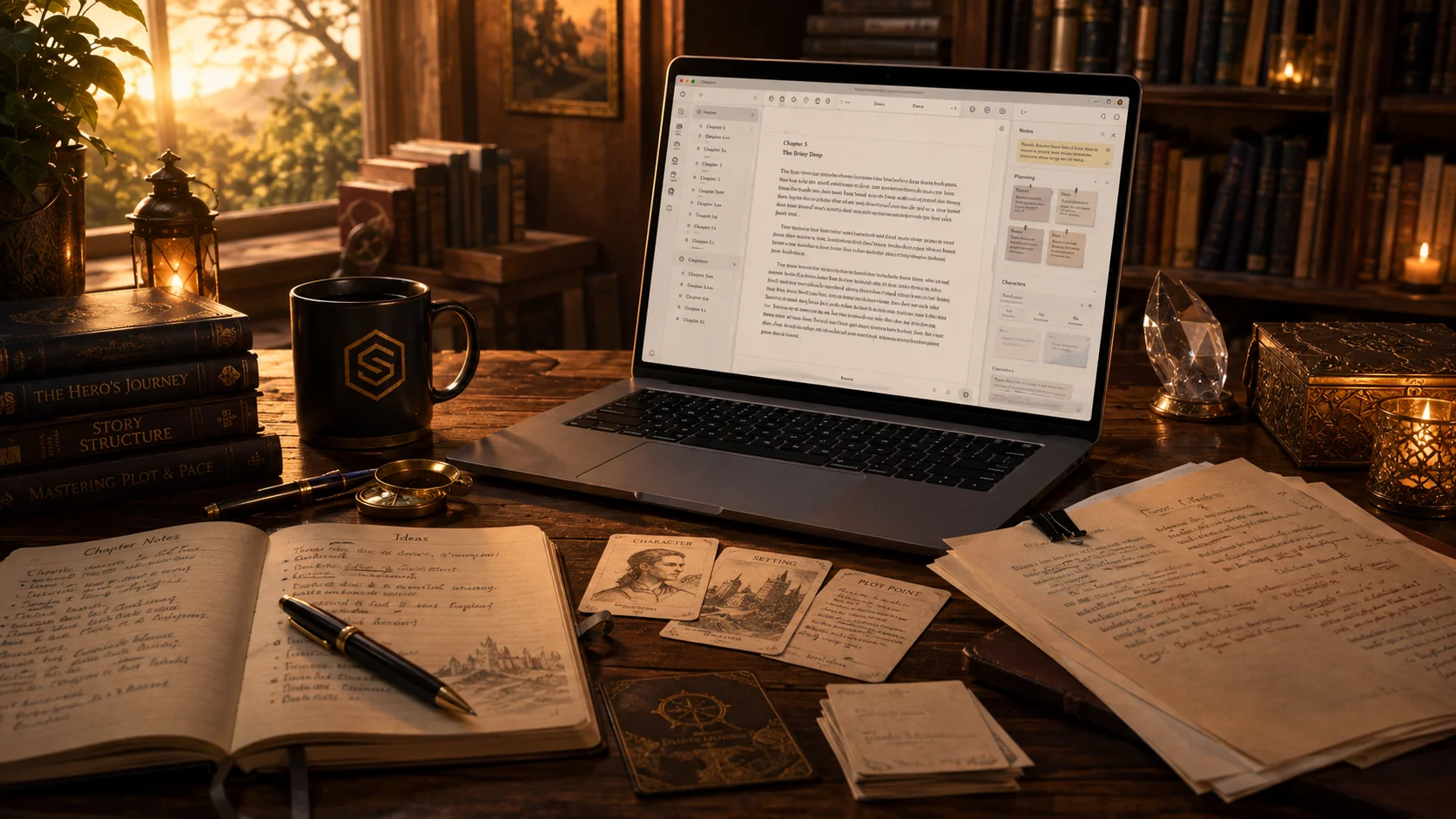
Looking for the best writing software for authors in 2026? Before choosing an app, discover the 10 features that actually matter for organizing your manuscript, developing characters, planning your story, using AI responsibly, collaborating, and preparing your book for publication.
Read the article →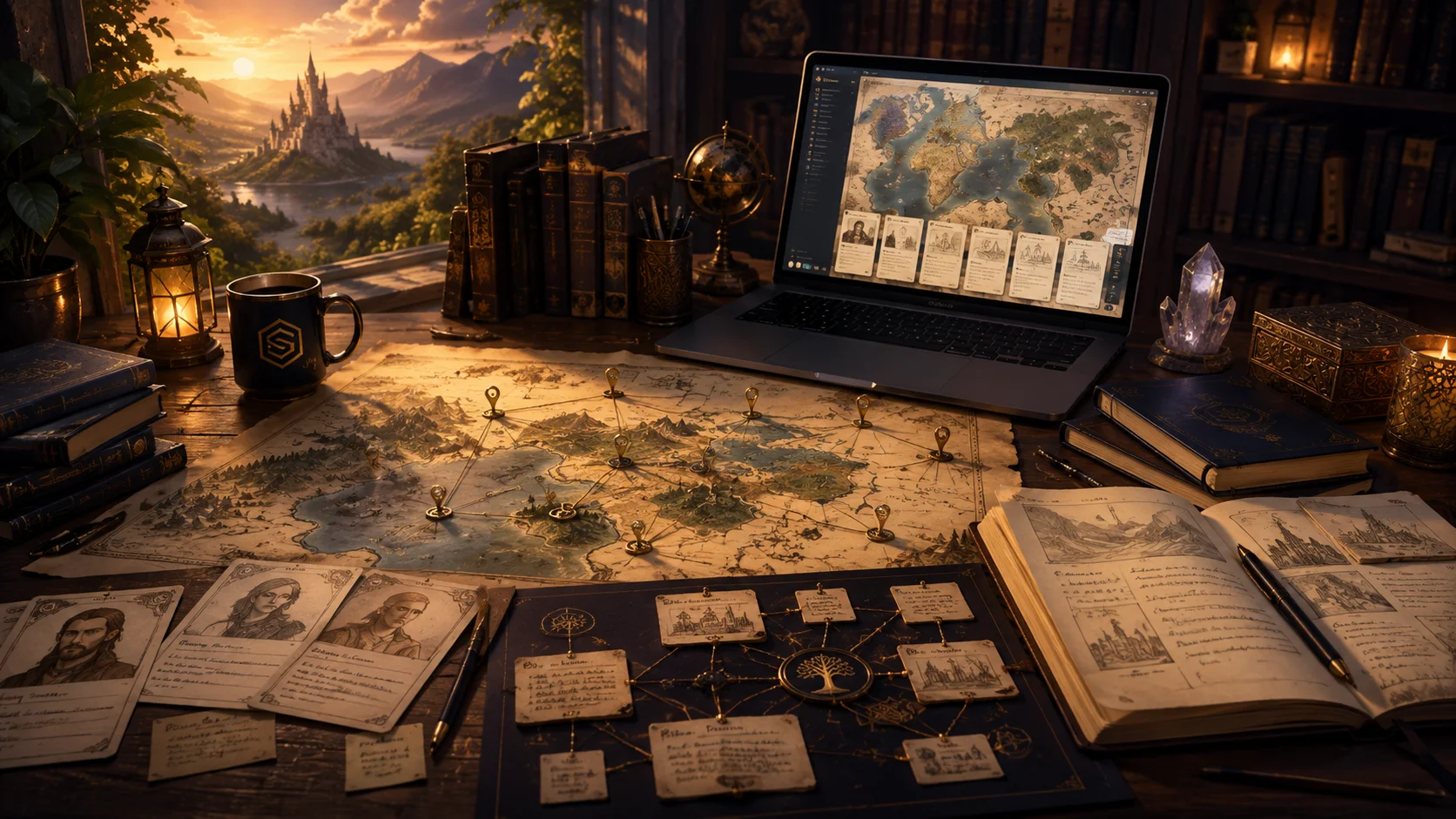
Looking for the best worldbuilding software for writers in 2026? Here’s what actually matters when choosing a tool to help you organize characters, locations, lore, timelines, and maps—and why the right platform can make your story world easier to build and easier to write.
Read the article →